Rx Kids cash-assistance program expands to 60 Michigan communities

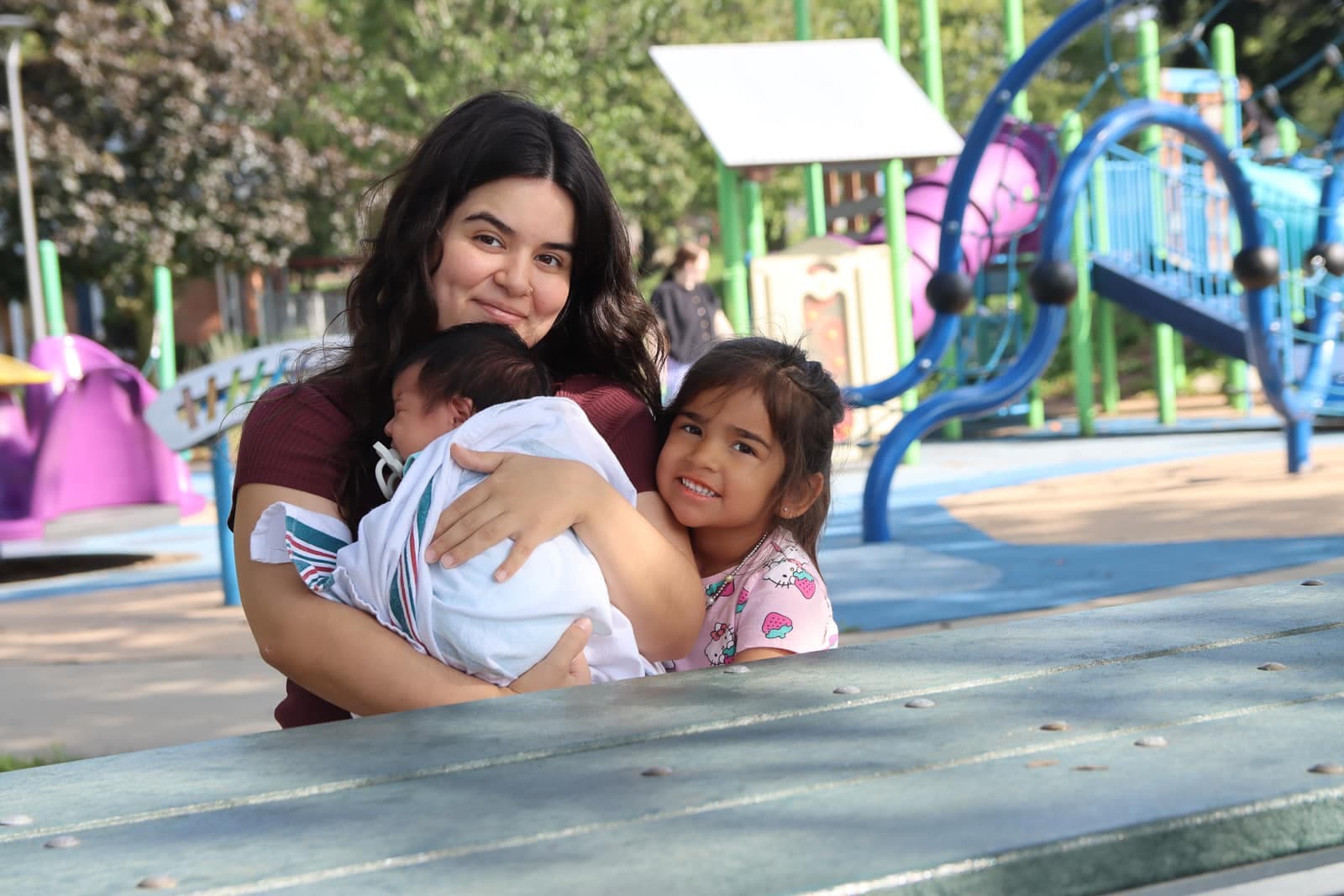
Michigan's Rx Kids program, which provides unconditional cash payments to expectant parents, has expanded to 60 Michigan communities and two locations outside the state, according to Dr. Mona Hanna, the program's director.
Rx Kids launched in Flint in 2024 as the country's first community-wide prenatal and infant cash prescription program. It provides eligible families $1,500 during pregnancy and $500 each month throughout a baby's first year. Parents can spend the money without income thresholds, work requirements or restrictions on what they buy.
Hanna, a pediatrician and associate dean of public health at Michigan State University College of Human Medicine, said the program was designed to be simple enough to grow quickly.
"We built Rx Kids from the very beginning to be simple so that it could be scalable," Hanna said. "People are poor during this time. They don't need complicated bureaucratic, paternalistic ways to support them. They just need to not be poor."
The expansion makes Rx Kids the largest unconditional cash transfer program for expectant parents in the United States, according to program officials.
"We are now in 60 Michigan communities, and two out of state," Hanna said. "The biggest lesson has been the enthusiasm for this program, and that it is something families are demanding."
Program staff describe the effort as a health intervention aimed at pregnancy and infancy, when families often face high costs and lower incomes. Researchers estimate that a baby's first year can add roughly $20,000 in expenses, while unpaid leave or reduced work hours can cut household earnings.
A recent study in The Lancet found that Flint's Rx Kids program was associated with significant reductions in preterm births, low birthweight births, neonatal intensive care unit admissions and smoking during pregnancy, as well as increased use of adequate prenatal care. The study compared birth outcomes in Flint before and after the program launched with outcomes in similar Michigan communities.
Researchers found the program was associated with a 2.7 percentage-point reduction in preterm births and a 4.2 percentage-point reduction in low birthweight births compared with matched cities.
Hanna said those outcomes have long been difficult for public health programs to change.
"For decades, researchers have been trying to decrease prematurity or decrease NICU admissions," she said. "Here is one simple intervention being delivered at a population level that's moving the needle."
Program data collected through 2,288 participant surveys across Rx Kids communities found that families reported spending the payments on basic needs. According to the survey results, 74% of families used the money for baby supplies such as diapers, wipes and formula; 59% spent it on food; 37% used it for housing costs; and 35% used it for utilities. Researchers found virtually no spending on luxury or discretionary items.
When mothers identified specific purchases, diapers and changing supplies were the most common, followed by bottles, clothing, formula, furniture and car seats.
Program officials described one case in which Felicia Lasher applied for benefits while she was in labor at the hospital. She completed the paperwork during delivery and was approved before leaving the hospital.
Hanna said she hopes the program's growth will prompt discussions about providing cash support to every newborn family.
"I hope we can continue to build on our momentum and help more kids in communities all over," she said. "I hope we get to a point where there's conversations at the national level of doing this for every single baby."
As new communities continue to join, Hanna said she wants the debate to move from whether direct cash assistance works to how far it can be extended.
"The science is showing that this prescription for health, hope and opportunity is working at scale," she said. "It's something we should be paying attention to and doing for even more families."