Detroit People’s Food Co-op on Woodward Avenue seeks $155,000 to stay open

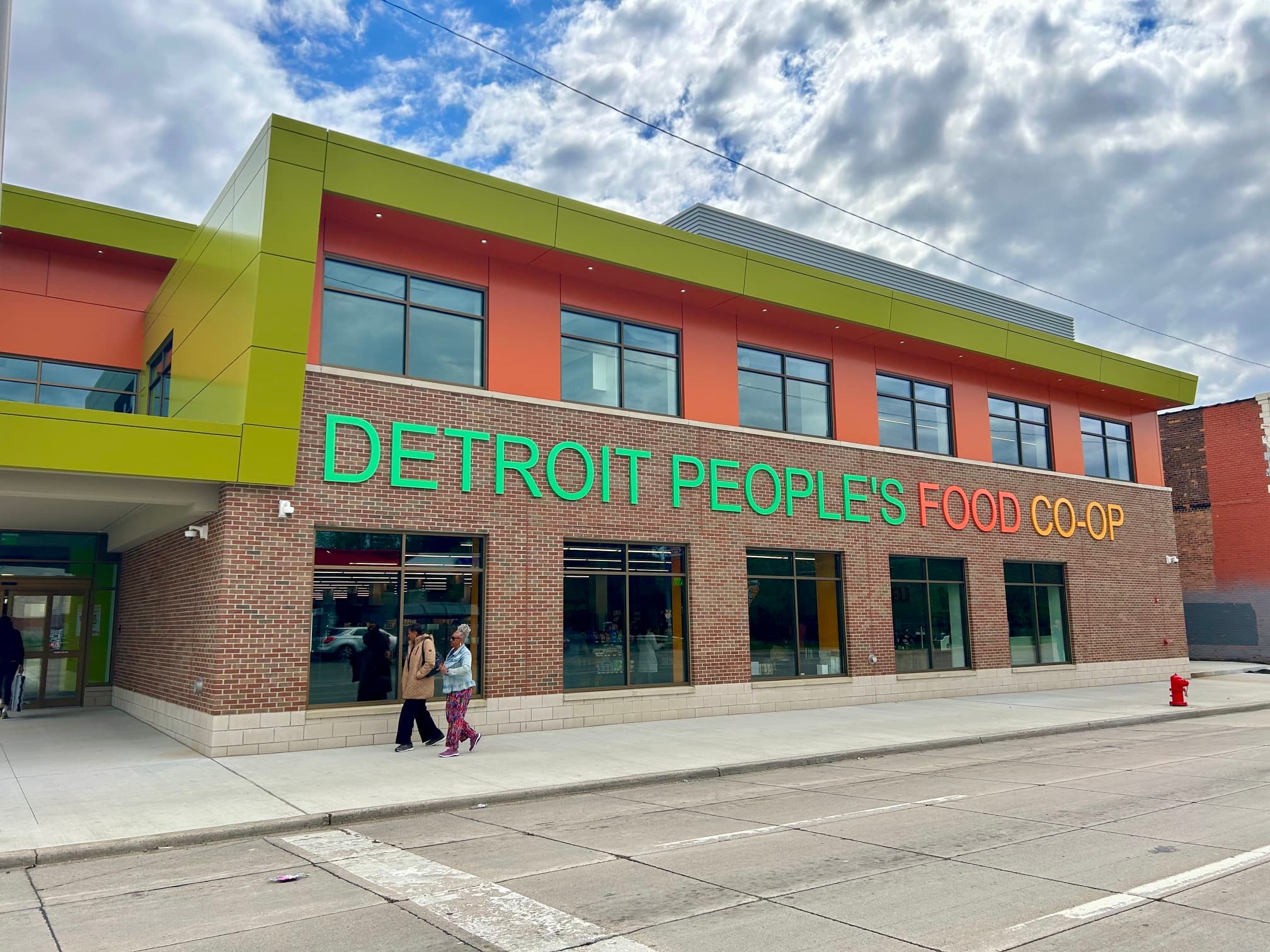
Detroit People’s Food Co-op, the city’s first Black-led, full-scale grocery store, has launched an urgent fundraising campaign seeking $155,000 in the next month to remain open.
The 15,000-square-foot store on Woodward Avenue in Detroit’s North End opened in early 2024 and records $3 million in annual sales. Co-op leaders say the business is struggling with cash-flow problems caused by food inflation, management turnover and public confusion about how the cooperative model works.
Malik Yakni, who has helped lead the project, said the store and its general manager split early this year. He said the pool of grocery store managers with both retail experience and understanding of cooperative principles is small, and it took six months to fill the position. The new manager later suffered an accident and has only recently returned to work part-time.
Yakini said shoppers also misunderstand the co-op. Some think it is a food pantry, while others assume they must be members to shop there, similar to a warehouse club. In fact, anyone can buy groceries at the store without paying a membership fee.
The co-op is a community-owned operation. People at least 21 years old can pay a small fee to become owner-members, serve on committees and receive profit sharing if it is available.
The store has launched a campaign to stabilize operations. It is accepting donations through a GoFundMe page and seeking small-scale investors willing to contribute at least $1,000. Co-op leaders said some shelves have sat empty and the store needs to replenish inventory quickly while planning for long-term stability.
Food costs are the main problem. Small independent grocers generally cannot buy in bulk at the same discounted rates as national chains. Yakini said many items at the co-op are priced in line with, or lower than, those at other grocery stores.
The co-op also pays its employees what Yakini called a solid wage. Yakini said that increases operating costs.
Yakini said the store has a purpose beyond selling food.
“Clearly it is more than a grocery store, and the value proposition is much larger in terms of community development, creating community based jobs, and creating a democratic institution that is owned by community members,” Yakini said. “For me, those things, and I hate to use this word, trump the items that cost a few cents more at our stores.”
The co-op is one of the few Black-owned or Black-managed grocery operations in Detroit, where most of the city’s roughly 80 grocery stores are not Black-owned. Co-op leaders say the store provides training and management experience for Black Detroiters in an industry where those opportunities have been limited.
The fundraising campaign aims to keep the store operating while leaders address staffing, inventory and public education. Supporters can donate through the co-op’s GoFundMe campaign or apply to invest at least $1,000 through the store’s website.