Detroit Thermal sought Black residents to speak at Lafayette Park hearing, emails in lawsuit show

A Detroit Thermal employee asked a Lafayette Park co-op leader to recruit two Black residents to speak in favor of the company’s steam project before a city hearing, according to emails entered as exhibits in a lawsuit over the disputed work. In one exchange, the co-op leader replied, “We are playing the diversity card as best as we can get that going.”
The messages, filed in Wayne County Circuit Court, show how Detroit Thermal and supporters at 1300 East Lafayette organized testimony before a May 14, 2025, hearing of the Detroit Historic District Commission. The company also helped shape what supporters would say to commissioners, according to the emails.
In a May 8, 2025, email, Sean Reed, Detroit Thermal’s business development account manager, told Ed Broutin, secretary of the 1300 East Lafayette Cooperative board, that company spokesman Harvey Hollins III wanted a particular lineup of speakers.
“Also, I spoke with Harvey today, and he mentioned that four speakers would be excellent for representing 1300: you, Amy (Board President), and two African American residents,” Reed wrote. “He mentioned Mrs. Love (?) as one possibility.”
Reed asked whether Broutin or another board member could “help secure this” and offered to work with the residents on “refining their statements.”
Broutin, a retired General Motors engineer, responded the same day.
“Brought tears to my eyes it’s so beautiful!” he wrote. “We are working to get as many residents as possible to the meeting. And we are playing the diversity card as best as we can get that going. Thanks for the update.”
The emails also show that Detroit Thermal general manager Rick Pucak asked Reed to review Broutin’s draft remarks for the hearing. Reed supplied a version labeled “Revised Statement,” which emphasized the racial and economic diversity of the high-rise, according to the exhibits.
The testimony being arranged came one day after Broutin had already used Lafayette Park’s racial history in public comments to the commission. He noted that the neighborhood was built on land once occupied by Black Bottom, the predominantly Black neighborhood destroyed during urban renewal.
Detroit Thermal is a downtown steam utility owned by funds managed by a Paris-based infrastructure investment firm. The company said residents asked for its help.
“The residents at 1300 Lafayette East Cooperative asked us for help and we were happy to provide it,” Detroit Thermal said in a statement. “As a company born and run in Detroit, we strive to meet the needs of all Detroit communities, and we know that this neighborhood has had a complicated history ensuring equitable access to housing, given that it was the epicenter of Detroit’s Black Bottom neighborhood.”
The company also said it would continue to help the 1300 Lafayette East residents obtain “clean, affordable heat this winter despite the opposition of a small but vocal group of their neighbors.”
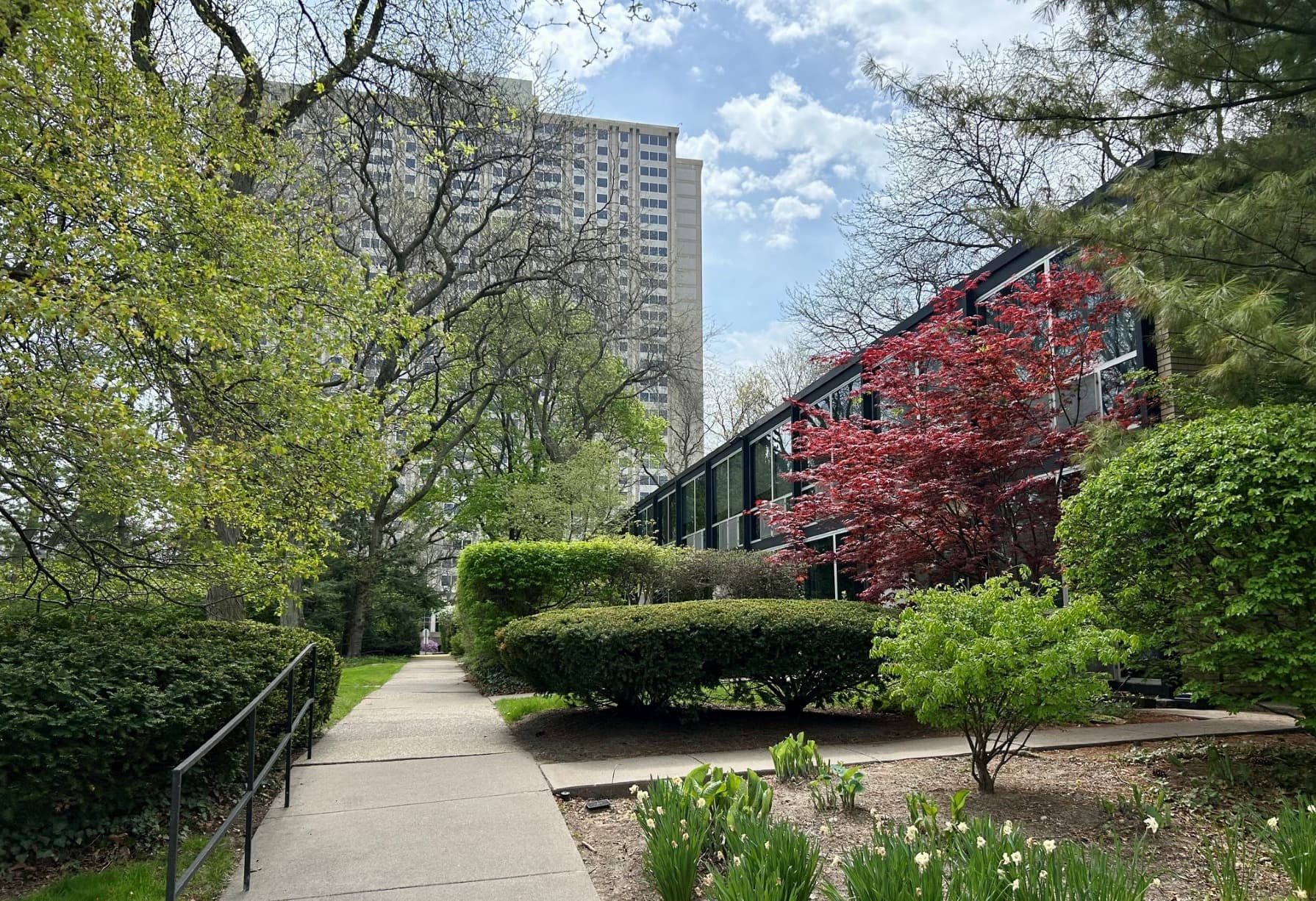
The May 8 emails were sent six days before the commission hearing over Detroit Thermal’s plan to reconnect 1300 East Lafayette to the underground steam system after the high-rise’s boiler system failed. The high-rise is outside the Lafayette Park/Mies van der Rohe Historic District, but Detroit Thermal wanted to excavate and install infrastructure across property belonging to the historic townhome cooperatives.
More than 60 residents spoke at the May 14 hearing. Supporters emphasized the high-rise’s need for reliable heat, while opponents warned that construction could damage the neighborhood’s landscape and mature trees and threaten the character of the National Historic Landmark. Commissioners did not approve the project that night and asked Detroit Thermal to return with additional information.
The Historic District Commission approved the project with conditions in July 2025, but the fight moved into court. Four Lafayette Park townhome associations sued, arguing that Detroit Thermal had no right to use easements on their property to provide steam to a separate building outside the subdivision.
In June, Wayne County Circuit Judge Annette Berry issued a permanent injunction barring Detroit Thermal from entering or excavating on the townhome property for the project. Berry ruled that the old easements could not be expanded to serve 1300 East Lafayette.