Detroit council orders citywide inspections of Munoz Realty portfolio and demands fixes at Greenhouse senior apartments

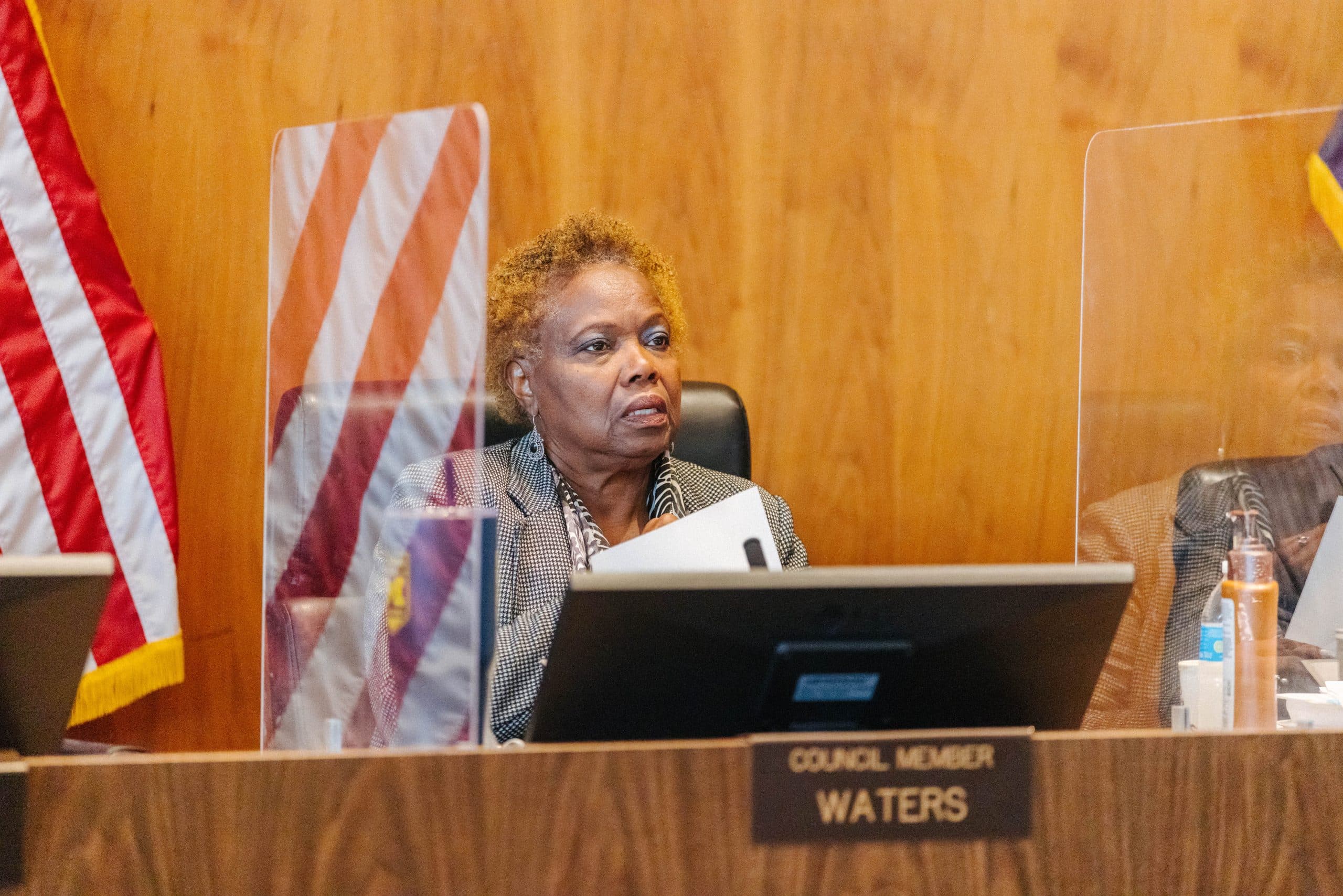
The Detroit City Council unanimously approved a resolution Tuesday calling on the city’s building department to inspect every residential and commercial property owned, managed or operated by Munoz Realty or its owner, Gaston Munoz.
The resolution, introduced by Council Member Mary Waters, asks the Buildings, Safety Engineering, and Environmental Department to determine whether the properties comply with Detroit rental, health and safety rules. It tells the department to focus on occupied buildings with children or seniors and to submit regular written reports on repairs, violations, abatements and compliance.
“We cannot continue to allow landlords like that to put our people in deplorable conditions,” Waters said. “We can’t tolerate that anymore.”
The council took up the measure three months after it approved a legal settlement with Munoz and his real estate firm over substandard conditions and unpaid fines across hundreds of properties. Waters, Council Member Renata Miller and Council Member Denzel McCampbell voted against that agreement, saying it was too lenient.
The July settlement requires Munoz to repair 299 properties on a monthly schedule and have them re inspected and certified by BSEED. Once repairs are complete, the city will reduce roughly $460,000 in blight ticket fines by half. Munoz remains responsible for other debts, including water bills, taxes and inspection fees.
When the lawsuit was filed, only 34% of more than 453 Munoz owned or managed properties had the certificate of compliance required to show a building had been inspected and was safe to occupy. That left 299 properties in violation of city and state law, according to the legal complaint.
Corporation Counsel Conrad Mallett said in a written statement Wednesday that a third party inspector has inspected 50 properties listed in the court order under BSEED protocols. BSEED has issued 33 certificates of compliance so far, Mallett said.
Mallett said the city “does not believe Mr. Munoz has complied with the order.” The city filed a motion this month asking the circuit court to order Munoz and his corporate entities to abate 10 properties per month on a consistent basis. The city is also seeking payment of all outstanding fees owed to BSEED, the Detroit Water and Sewerage Department and the City Treasury for properties where compliance certificates have been issued.
The motion was heard October 7, 2026.
At Tuesday’s session, council members also asked city departments for updates on Greenhouse Apartments, a subsidized senior living facility on Detroit’s west side with 209 units. City officials said the building has been troubled for months by bedbugs and broken elevators.
Council President Pro Tem Coleman A. Young II asked BSEED, the Department of Neighborhoods and the human services office to report on inspections, resident assistance and possible penalties for building managers who fail to provide habitable housing.
“You should not be sleeping in a place with bugs that can eat your flesh and you should be able to get in an elevator that works,” Young said. He described residents who cannot walk having to drag themselves up and down stairs as dangerous and “inhumane.”
BSEED Chief Enforcement Officer Arthur Rushin told council members an inspector recently confirmed the passenger elevator was out of service. He said a contractor was sent to repair it, evaluate a freight elevator and conduct safety checks. Rushin said both elevators were expected to be operational by the end of Tuesday.
In written responses provided later, Rushin confirmed the passenger elevator had been down for about six months.
Rushin said BSEED has received three bedbug complaints at the building since 2023. He said property management told him eight units currently have active bedbug problems and pest control treatments are being conducted every Monday. He said the work to eliminate the infestation is ongoing.
Rushin said the building has a Certificate of Compliance, though it has received citations in the past for elevator and certificate related issues.
A Greenhouse Apartments representative who identified herself as a community manager declined to comment beyond saying “the issue is being handled.” KMG Prestige, the building’s management company, did not respond by Tuesday evening to a request for comment.
Council Member Angela Whitfield-Calloway said the building has had problems for years and noted it was featured on Fox 2 Detroit last year because it lacked heat.
Young said the council should pursue the strongest available penalties against landlords who do not comply and asked the Law Department what legal options exist. Graham Anderson, a legislative liaison with the Law Department, said habitability issues could be grounds for expedited legal action and that he would speak with the department team that handles that work.
Young said he will seek funding for more housing inspectors in upcoming budget cycles. BSEED currently has 42 residential inspectors for the entire city. He also said he is open to technology that could support inspections, including drones or smart sensors.
Housing & Revitalization Department spokesperson Alison DeRees said Detroit has 86 HUD properties serving seniors, including Greenhouse Apartments.
Waters said the settlement with Munoz covers only part of the issue because the landlord owns additional properties beyond the 299 named in the court order.
“We want them to inspect all the rest of them,” she said. “We need all these properties brought into compliance.”
Council members said BSEED may not have the resources to complete a full portfolio review immediately and said funding for the department will be a priority in the city’s next budget talks.
“We have to find out from BSEED what it will take to get these inspections done,” Waters said.
Munoz did not immediately respond Tuesday to a request for comment on the resolution or progress under the settlement. In July, he said by email that he would follow the settlement terms as stated.
The settlement is one of several Detroit has brought against landlords with large portfolios of blighted or noncompliant rental properties. The city also sued Real Token, a blockchain real estate firm that owns rentals with hundreds of violations.