Ann Arbor Public Power Vote Stays on November Ballot After Court Rejects DTE-Backed Challenge
A Michigan appeals court has dismissed a lawsuit filed by a DTE-backed group that tried to remove a public power proposal from Ann Arbor's November ballot. The ruling keeps the measure in place, letting residents vote on whether the city should create its own municipal electric utility.
The ruling came Thursday from the Fourth District appellate court, where Judges Brock A. Swartzle and Anica Letica rejected the arguments made by the Ann Arbor Responsible Energy Coalition, known as A2REC. The group had sued the city and its clerk, Jacqueline Beaudry, last month, arguing they violated state law by accepting petition signatures in batches rather than all at once.
In their majority opinion, the judges wrote that state law does not specify how petitions must be filed and does not direct a clerk to reject a petition for canvassing supplemental signatures submitted afterward. That finding undercut the coalition's core legal claim and left the proposal on track for the ballot.
A2REC has received $1.8 million from DTE Energy to fund its campaign against the measure, according to campaign finance filings. The group has pointed to an independent analysis it commissioned that projected the cost of a city takeover of the electric grid at around $1 billion, a figure it says would land on the bills of Ann Arbor residents.
In a statement following the ruling, A2REC said it disagreed with the court's decision but would respect it. The group said the ballot measure asks voters to authorize pursuit of a city takeover of the electric grid that would require an estimated $1 billion in new debt, which it described as more than three times what Ann Arbor currently spends on police, fire, parks and roads combined. The group also argued that the proposed nine-member oversight board would not require a single seat to be held by someone with utility or engineering experience. A2REC said it plans to make its case directly to voters between now and Election Day.
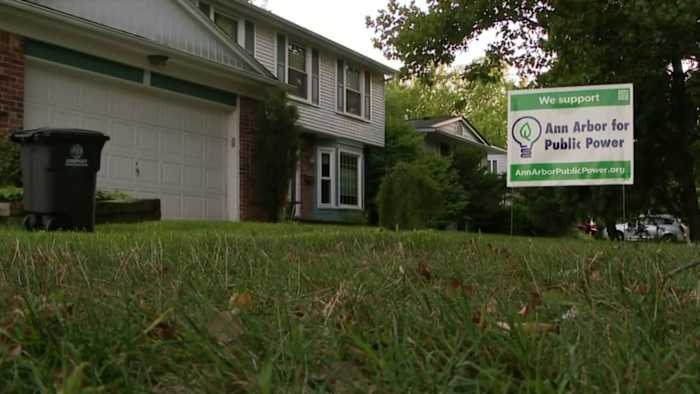
The ballot proposal comes from Ann Arbor for Public Power, a nonprofit that gathered the petition signatures needed to put the question before voters. The group describes the measure as the first step toward ending DTE's monopoly on electricity distribution in the city. If approved, the proposal would create a new municipal electric utility as a city government department and establish a process for choosing members of a governing board in 2028. It would also trigger a feasibility study to determine the projected costs of building and operating a public utility.
A2P2 Executive Director Brian Geiringer said after the ruling that he hopes DTE is finished spending money to try to keep the question away from voters. He said Ann Arbor residents earned the right, through their petition signatures, to choose between DTE and a public utility.
A2P2 has pushed back hard on the $1 billion cost estimate cited by A2REC, calling it wildly inflated in a formal response to the third-party analysis. The group has argued the projection rests on assumptions it considers unsupported. A2P2 President Sean Higgins said the group expected a disinformation campaign ahead of the vote but did not expect DTE and A2REC to challenge the right of residents to vote on the question in the first place. Higgins said the group is glad the courts saw through what he called a ploy.
The fight over the ballot measure is part of a longer-running dispute between Ann Arbor residents and DTE over reliability and rates. Public power advocates in the city have argued for years that a municipal utility would give residents more control over service and pricing decisions, pointing to outages and rate increases under DTE's ownership of the grid. DTE and its allies have countered that municipalization would be costly and risky, citing the price tag of buying out existing infrastructure and building new administrative capacity to run a utility.
The measure will appear before Ann Arbor voters on the November general election ballot. If it passes, the city would move to conduct the feasibility study required before any further steps toward creating a municipal utility could proceed.